How I Helped a Tours Website Appear in Google AI Overview, ChatGPT, and Other AI Tools
AI search has changed how people plan trips.
Tour customers no longer scroll ten links.
They ask AI questions.
“Best private tours in Ireland”
“Are guided tours worth it?”
“How much does a city tour cost?”
If your tours website is not part of those answers,
you lose bookings before the customer even reaches Google.
This case study explains how I optimized a tours website to appear in AI results, not just traditional search.
The Initial Situation
The tours website had:
- Decent traffic
- Good-looking design
- Service pages for tours
But it had zero presence in AI tools.
No Google AI Overview visibility.
No mentions in ChatGPT or Perplexit
The problem was not content quality.
The problem was how the content was structured and presented.
Step 1: Understanding How AI Chooses Sources
AI does not rank pages the same way Google did before.
It looks for:
- Clear answers
- Well-organized topics
- Pages that solve real questions
AI prefers websites that explain things simply.
Like a human guide talking to a traveler.
So the goal was clear:
Turn the tours website into a trusted guide, not just a sales page.
Step 2: Rebuilding Content Around Real Tour Questions
Instead of writing generic blogs,
I mapped real customer questions such as:
- How long is this tour?
- Who is this tour for?
- Is it private or shared?
- What is included in the price?
- Is it suitable for families or seniors?
Each important question got its own section.
Clear headings.
Short answers.
This helped AI understand context, not just keywords.
Step 3: Creating Topic Authority (Not More Pages)
Most sites publish more and more pages.
That does not help AI.
I focused on depth, not quantity.
For each tour type, I created:
- One main page
- Supporting explanation sections
- Internal links between related tours
This told AI:
“This website truly understands tours.”
Step 4: Making Content Easy to Quote
AI often quotes or summarizes content.
So I made content easy to reuse.
- Short paragraphs
- Direct answers
- Natural language
- No marketing fluff
This increased the chance that AI would pull text directly from the site.
Step 5: Trust Signals That AI Looks For
AI avoids weak or unclear sources.
So I improved:
- About page with real experience
- Clear service locations
- FAQs written from customer perspective
- Consistent internal linking
This built credibility.
Not for Google only.
For AI systems too.
Step 6: Results After Optimization
Within 2–3 months:
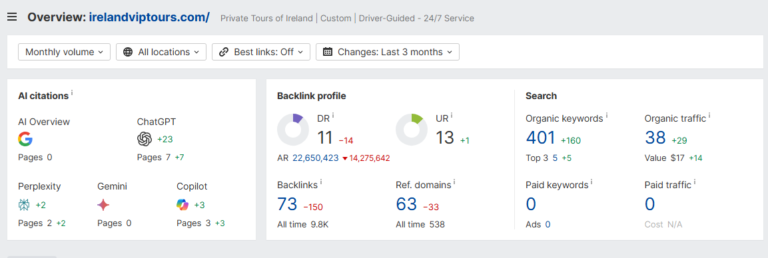
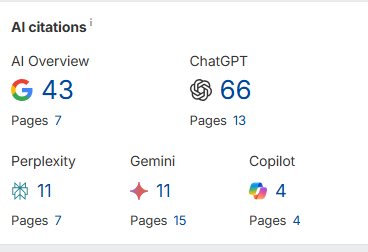
- Pages started appearing in Google AI Overview
- ChatGPT began referencing the site’s information
- Perplexity and Gemini picked multiple pages
- Organic inquiries improved in quality
Most importantly,
customers arrived already informed and ready to book.
Why This Works So Well for Tours Websites
Tours are experience-based.
AI loves experiences.
Travel queries are:
- Informational
- Local
- Decision-focused
This makes tours websites perfect for AI-driven visibility.
What This Means for Tour Business Owners
If your website is only built for old SEO,
you are invisible in AI search.
But if your site is structured as:
- A guide
- An explainer
- A trusted source
AI will promote you automatically.
How I Help Tour Websites Today
I don’t sell tricks.
I build clarity.
I help tours businesses by:
- Restructuring content for AI
- Rewriting pages to answer real questions
- Building topical authority
- Making websites AI-friendly, not spammy
This is long-term visibility.
Not short-term hacks.
Final Thought
AI search is not optional anymore.
It is where travel decisions begin.
If your tours website is not showing up in AI answers,
your competitors are taking your bookings.
This case study shows
it is fixable.
And repeatable.